| |
|
 Doha Youth Forum Concludes Doha Youth Forum Concludes
|
| 10/04/2015 |
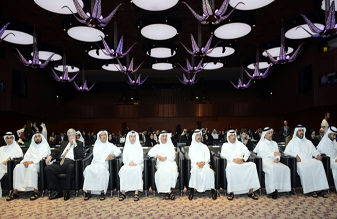
The Doha Youth Forum, being organized by Qatar Foundation in collaboration with the UN Crime Congress Preparatory Committee, in advance to the 13th UN Congress on Crime Prevention and Criminal Justice concluded at Qatar National Convention Centre with the closing ceremony on Thursday 9 April 2015. The Forum events started on 7 April which showcased creative participation of youth and students to share their visions in the fields of crime prevention. A total of 123 students representing different nationalities took part in the events.
The Forum witnessed active discussions on topics related with the agenda of the UN Crime Congress to be held during 12-19 April in Doha.
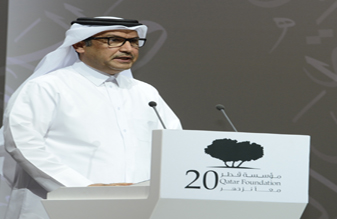
H.E Dr. Mohammed Abdul Wahed Al Hammadi, Minister of Education and Higher Education of Qatar gave key note speech in the closing event.
Speaking on the occasion H.E Dr. Mohammed Al Hammadi said that Qatar, hosting the Youth Forum and UN Congress on Crime Prevention and Criminal Justice emphasized the State’s leading role in international level and its trust to the role and contributions of the youth in sustainable development.
“No societies and nations can develop without deploying its resources in the right way; and human resources are the best resource ever. Here we have met to hear to the voices of our young generation and listen to their visions. We tie up our future on the youth. The enthusiasm shown by the youth reflects the bright phase of the tranquility and humanitarian fraternity directed by all religions and nations. It is also the reflection of human development that is connected with economic, social and technological developments. The strategic plans of Qatar is thus based on empowering the youth in order to befit them with the modern developments and technological advances. The culture of a nation is measured in accordance with the wakefulness of its youth”, he added.
 |
“The Supreme education council in Qatar is keen to support the educational process with all the capabilities of modern education to develop the capacity of youth and their activities that help them to raise their stance in problem-solving and decision-making.
There is no doubt that the debates and discussions that took place during this Youth Forum gave opportunity to determine the priorities and needs to face the challenges of the existing world. We have to do our responsibility to direct them towards the right way”, he added.
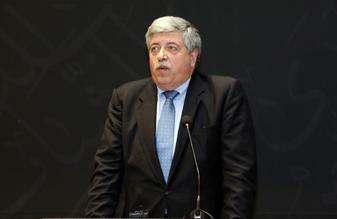
Dimitri Vlassis, Executive Secretary of 13th UN Congress on Crime Prevention and Criminal Justice said that Doha, hosting the first youth forum in the history of UN Crime congresses has grown to mark as a leading city in the world. The fruitful events which gathered whole of the world marked that Doha is city of departure not mere arrival.
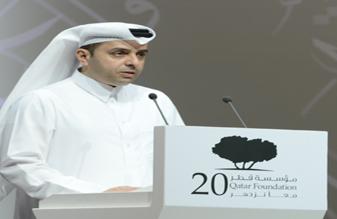
Engineer Saad Ibrahim al Mohannadi, President of Qatar Foundation, addressing the closing ceremony of the Doha Youth Forum said. “Youth are the leaders of future. No society can achieve development without their empowerment. That is the motive behind this unique Qatari initiative which helped the youth to play their role in workouts of the 13th UN congress on Crime Prevention and Criminal Justice.
The Doha Youth Forum tried to include the participants from students coming from different backgrounds and ethnicities so that it can shape a comprehensive viewpoint on the topics put forward for discussion. It gave chance to the participants to leave their footprints in the decisions and procedures of the United Nations. The Forum has contributed to train the youth to take the responsibility of the future and place their views and visions in the existing problems as well”.
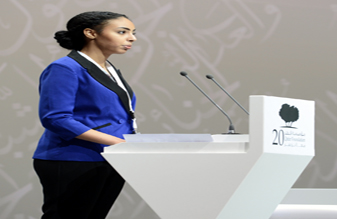
The student representatives presented a set of 18 recommendations formed after deep discussions and workshops.
Recommendations
Global and Regional Youth Forums
1. To strengthen the rule of law and support sustainable development, we encourage Governments to convene international or regional youth forums on crime prevention and criminal justice.
2. We call for the establishment of an independent Global Youth Council that would consist of outstanding young people, with a view to discussing problems and challenges which are endemic to their communities and are to be taken into consideration when designing appropriate crime prevention and criminal justice responses, and collaborating to find solutions through project development.
Public Awareness and Education
3. Recognizing that social, technological and academic education is imperative to tackling issues related to crime prevention and criminal justice, we encourage the creation of a Global Awareness Campaign that aligns with United Nations’ efforts to implement and promote a greater human rights culture and consciousness globally.
4. We call upon Governments to implement both formal and informal education programmers in primary and secondary schools, as well as in the community, in order to strengthen public awareness and knowledge of the judicial system.
5. We strongly support collaborative action geared towards strengthening governments’ crime prevention and criminal justice initiatives, in partnership with civil society and international organizations. An example of such collaborative action with a specific focus and target can be the introduction of a Digital Information Programme (DIP) in the school curriculum at the primary and secondary levels.
Community Action and Reporting Crime through Technology
6. We call upon Governments, with the support of the United Nations and the private sector, to take measures to strengthen the use of technology to facilitate the reporting of crime, particularly in cases where the victim is unable, for whatever reason, to speak to the appropriate authorities.
7. We further encourage governments to harness available technology to establish and further support community watch groups to disseminate information to the general public, deter criminal activity and operate as a neighbourhood resource and support network.
Prisons and Reintegration of Offenders
8. We call upon governments, in partnership with non-governmental organizations, to prioritize rehabilitation programmes inside and outside of correctional institutions available to all persons incarcerated to improve the process of reintegration into society.
Economic Development and Employment Opportunities
9. We call upon private sector entities, and encourage Governments and the United Nations to join this call, to actively promote and provide opportunities for people living in vulnerable situations and crime-prone areas, particularly young people, to serve in internship or training programmes with a view to long-term, stable employment.
10. We further call upon private sector entities to sponsor a range of community-based activities – such as sporting events, the installment of street lamps and the responsible disposal to needy organizations of unsold preserved food items – with a view to deter and prevent criminal activity.
Human Trafficking
11. We recommend to Member States, non-governmental organizations, private sector and other active stakeholders in the field of human trafficking, to adopt and promote comprehensive policies.
12. We strongly call for the establishment of joint initiatives that supports the creation of research centres to promote awareness about the impact of and challenges posed by trafficking in persons; and to generate and share information and statistical data, national measures and disseminate knowledge on best ways to prevent and combat it.
Identity Theft
13. We recognize that the internet and technology can provide opportunities, as well as pose challenges. To protect our identities, we call upon governments, social networking companies, and all relevant stakeholders to take all measures necessary to prevent and punish identity theft.
Cybercrime and Other Emerging Crimes
14. We recommend that governments encourage and promote public-private partnerships to address the challenges of cybercrime. We also strongly favour the active involvement of Internet service providers in the fight against cybercrime, especially through reporting suspicious behaviour to competent investigative authorities.
15. We recommend the adoption of regulations and normative standards to give social networking providers (i.e. Facebook, Google, etc.) the right to access, but not use or sell, the private information of users, such as date of birth, origin, e-mail and photos, among others.
16. We recommend the establishment of a research entity that would study the causes and effects of the progression of the digital environment on the livelihood of citizens.
17. We also recommend the repackaging of terms and conditions used online into less ambiguous and more accessible forms (such as short videos) in order to minimize the risk of exploitation.
Drug Trafficking
18. We strongly support joint initiatives between countries on regional and international levels focusing on drug seizures and border control.
|
|